A/B Testing in Instagram
Built the platform model for ad experimentation at Meta — the system and content principles that took A/B testing from a single Facebook-only product to 8+ surfaces company-wide.
The problem
Advertisers on Instagram had no way to A/B test their ads. They were already approximating it manually, running two ad versions and comparing results by eye. Instagram's ad spend was growing fast with no measurement system to match it.
Facebook's existing A/B testing product was built for sophisticated, high-spend advertisers who wanted statistical precision. Instagram's advertiser base was different: creators, influencers, and Shops sellers needed something simpler, without losing rigor for the advertisers who still wanted it.
My role
Sole content designer on a team of 1 lead product designer, 2 junior designers, and 4–5 engineers, but the real scope was organizational, not just the immediate team:
- Co-developed the business case and pitch deck with my PM; presented to Instagram ads product leadership to get the project approved
- Partnered with our Product Design Lead to prototype the MVP and pitch it to design leadership
- Built consensus across Instagram's ad creation and measurement content design teams to get sign-off — this wasn't a single-team ship, it required alignment across a much larger surface
The principle: name things the way people already think about them
"Product language should match how people already think, not how the system technically works."
The product launched as "Split testing," a technically accurate name nobody used. Advertisers, marketers, and product teams all called it A/B testing, in every market we localized into.
I made the case for renaming it, leading to a 12% lift in tests created. The principle behind that decision shaped every choice that followed.
The platform pivot: simplify without losing rigor
Bringing A/B testing to Instagram wasn't a simple port. It required deciding what was essential and cutting the rest.
Facebook's precise statistical framing read like this:
Facebook (before)
"There's a 95% chance Variant A will get more taps than Variant B if you run these ads again with the same budget and schedule."
Instagram (after)
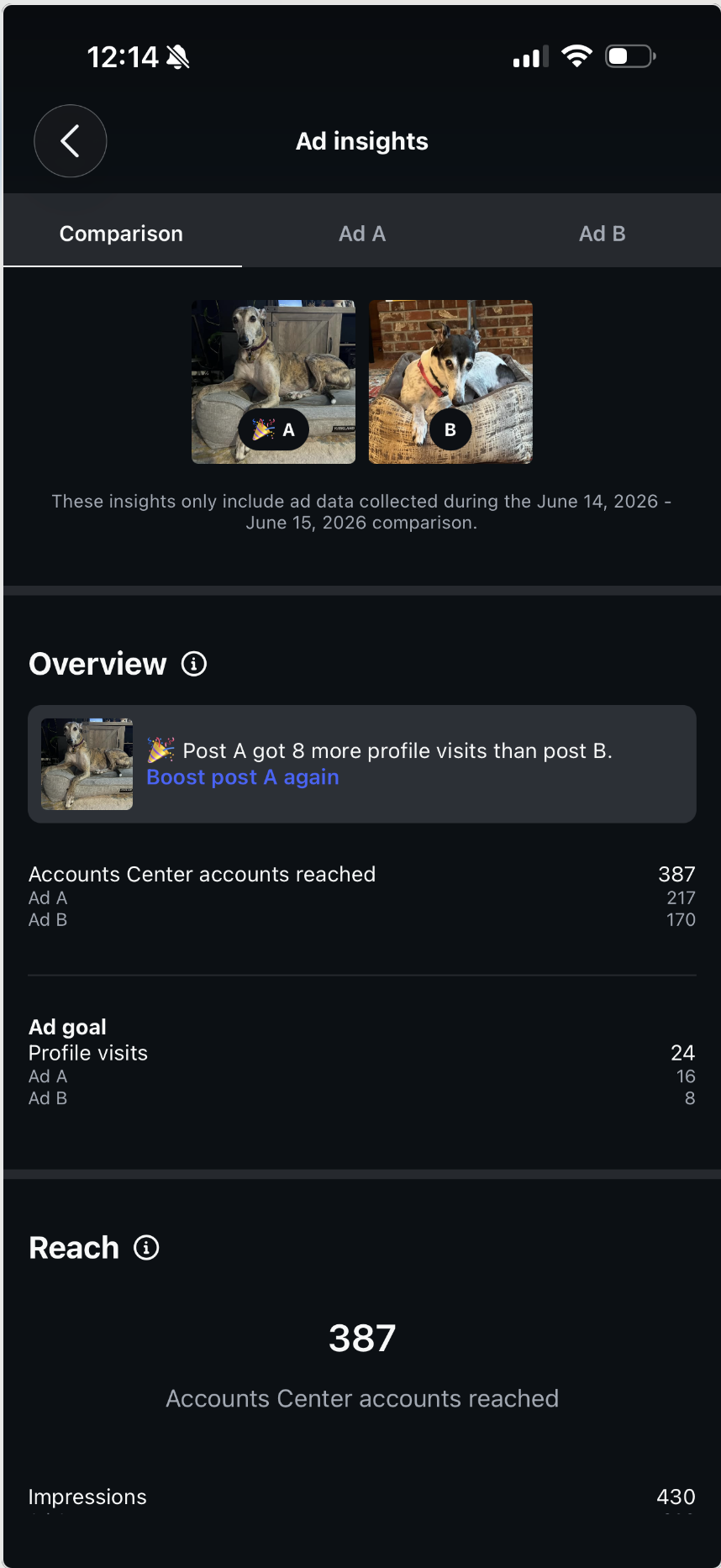
"🎉 Post A got 13 more taps than Post B."
Statistical depth stayed available in tooltips for advertisers who wanted it.
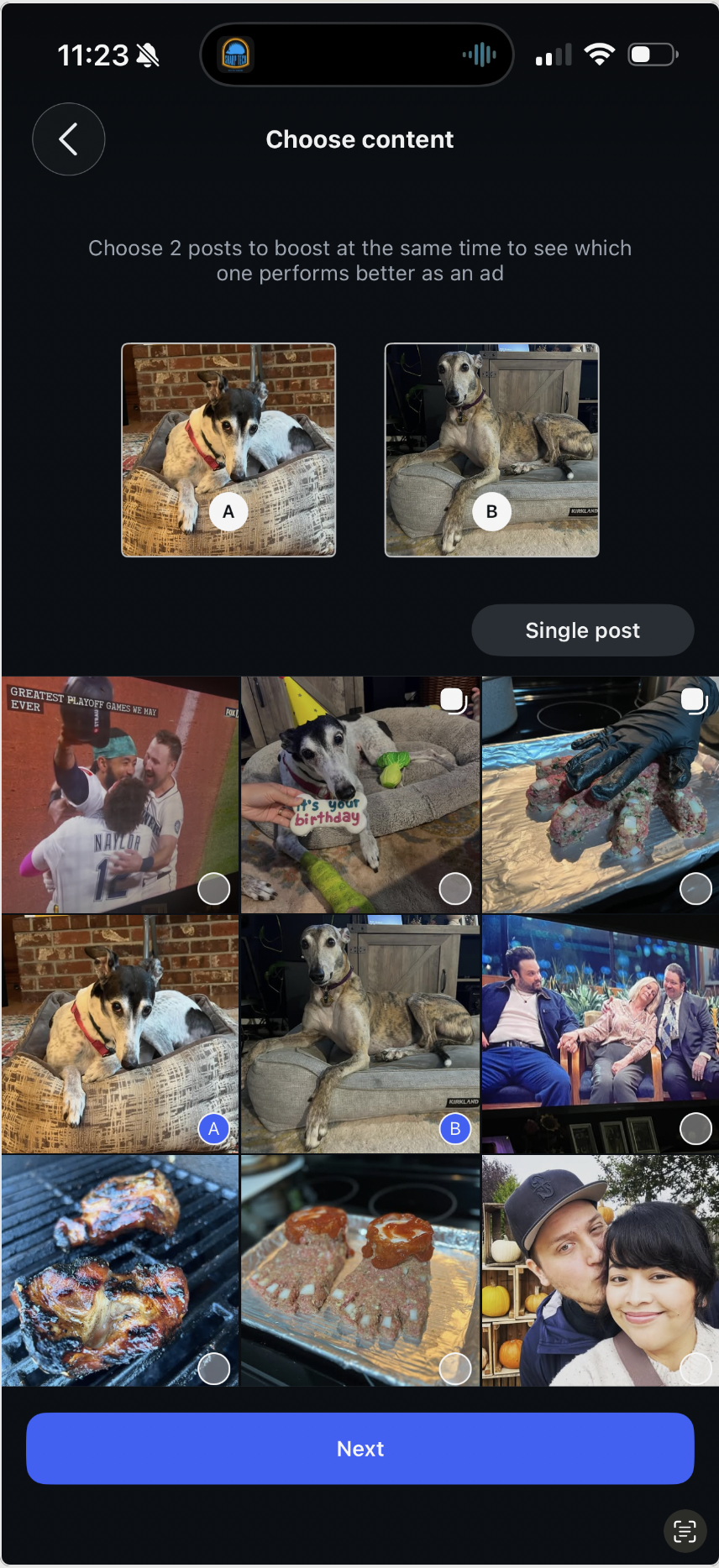
Instagram's leadership set a hard constraint: the word "test" couldn't appear in the UI, over concerns it would add friction. I disagreed. This was a testable question, and we weren't given the option to test it. I made the case anyway, lost the argument, and worked within the constraint. I landed on "Compare 2 posts," a name that kept the conceptual thread intact without the word they'd ruled out.
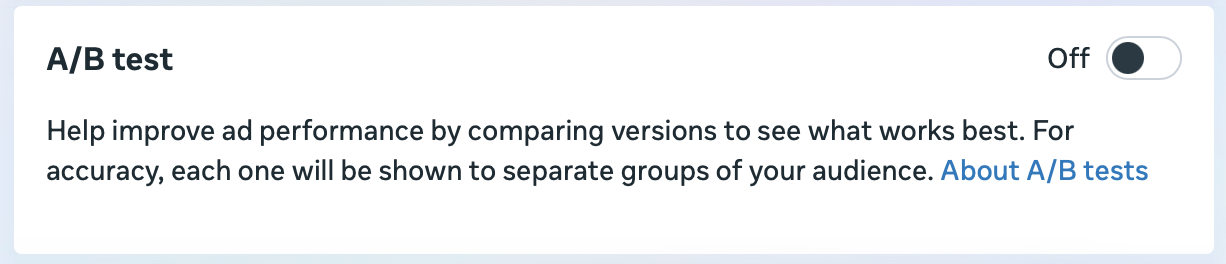
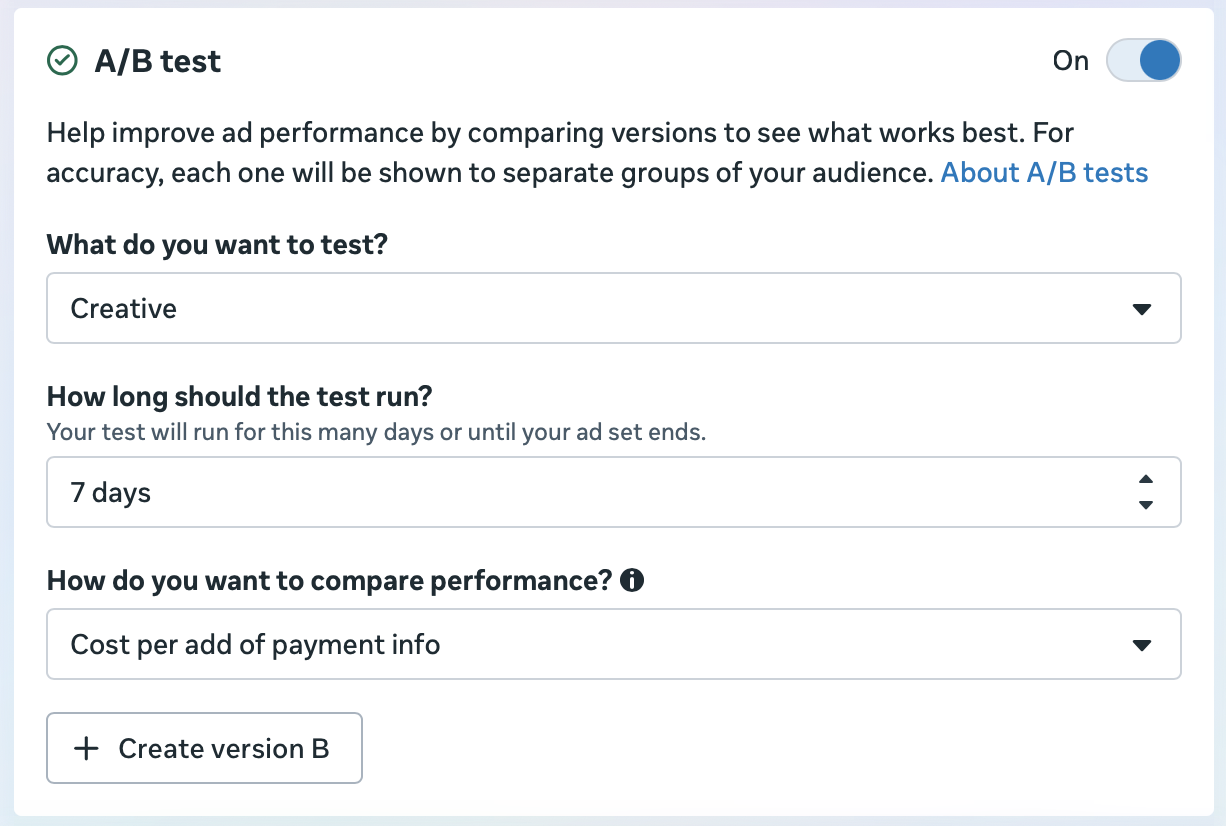
Facebook A/B testing — entry point (collapsed and expanded)
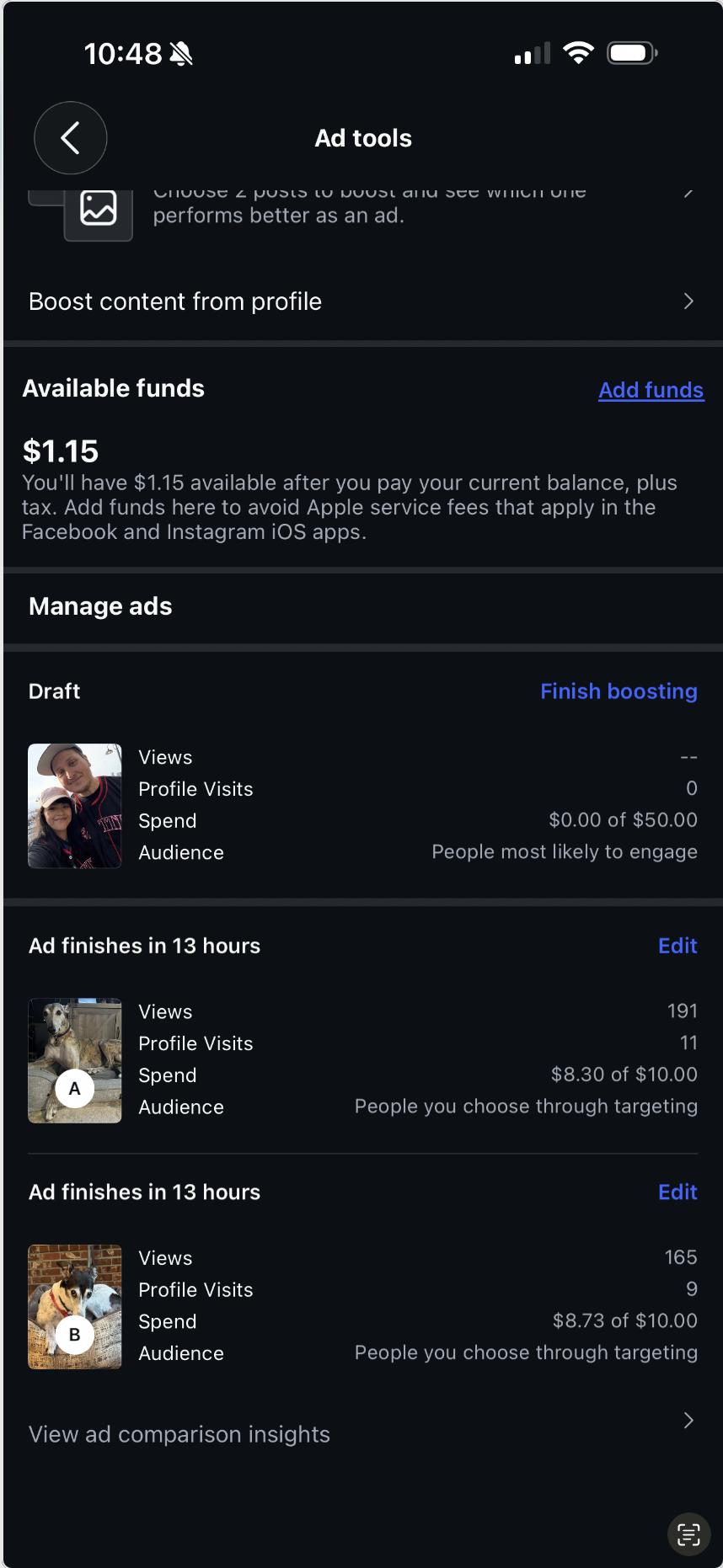
Instagram — Choose content · In-progress · Ad insights
The outcome
Shipped across 8+ Meta surfaces, exceeding adoption goal by 192%. The platform model — not just the Instagram launch — became the template other teams used to scale experimentation into new products.
Monthly active advertiser figures available upon request.