Ask a Lawyer
Rebuilt a legal Q&A platform's content system to drive better questions, better answers, and deeper engagement, including a state-aware NLP recommendation system that doubled Q&A revenue year over year.
The problem
Ask a Lawyer let people search for legal questions, land on an Avvo Q&A page, and either ask their own question or contact a lawyer. The product needed to do three things well:
- Drive SEO traffic from long-tail legal searches
- Filter out low-quality leads by helping people figure out if they actually needed a lawyer
- Give lawyers a way to earn high-quality leads through genuinely useful answers
It wasn't doing any of them well. Pages were disorganized, with poorly written questions, low-quality answers, and almost no connective tissue between them. Recommendations ignored location entirely, so someone asking about prenups in Alabama might get pointed to a guide written by a California lawyer.
"Too little information and a lawyer couldn't help. Too much, and someone might reveal something sensitive."
Most users coming to the platform were dealing with a legal issue for the first time: nervous about cost, unfamiliar with state versus federal law, unsure if they even needed a lawyer. Every content decision had to account for that tension.
My role
Sole content strategist on the project, leading two parallel workstreams:
- Full overhaul of the Q&A submission experience, for both users and lawyers
- Content strategy for a new NLP-based recommendation system
Partnered with UX research, product design, engineering, and data science throughout. Worked directly with lawyers and legal experts to inform how the recommendation system should behave.
The business case
The hardest part of this project wasn't the content design. It was convincing leadership to fund it.
Avvo was pushing hard to divert traffic toward flat-rate legal services, a product with immediate, predictable revenue. The thinking: why send people deeper into free Q&A when you could convert them directly?
My PM and I made the counterargument together: most Q&A traffic converted at extremely low rates, and pushing cold, unfamiliar users straight to a purchase wasn't working. Our hypothesis was that building trust through more Q&A content first would produce better conversion downstream. We got the green light to test it.
The system
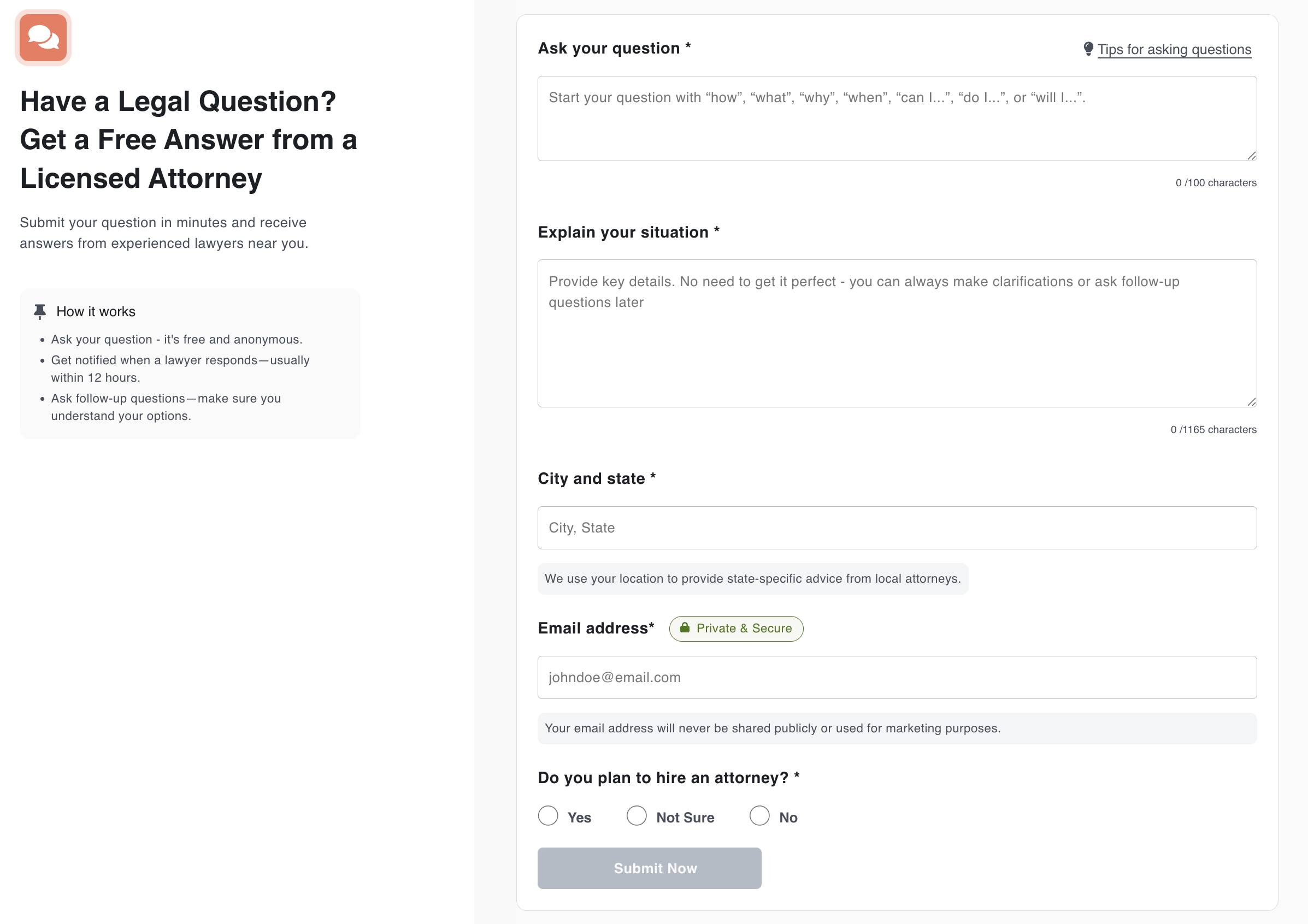
Redesigned Q&A submission. The original flow was a single empty text box. I added structured fields, specific prompts, and contextual guidance, enough to help users ask a focused question without encouraging oversharing. The lawyer-side flow got matching treatment: built-in tips to encourage more thorough, useful answers.
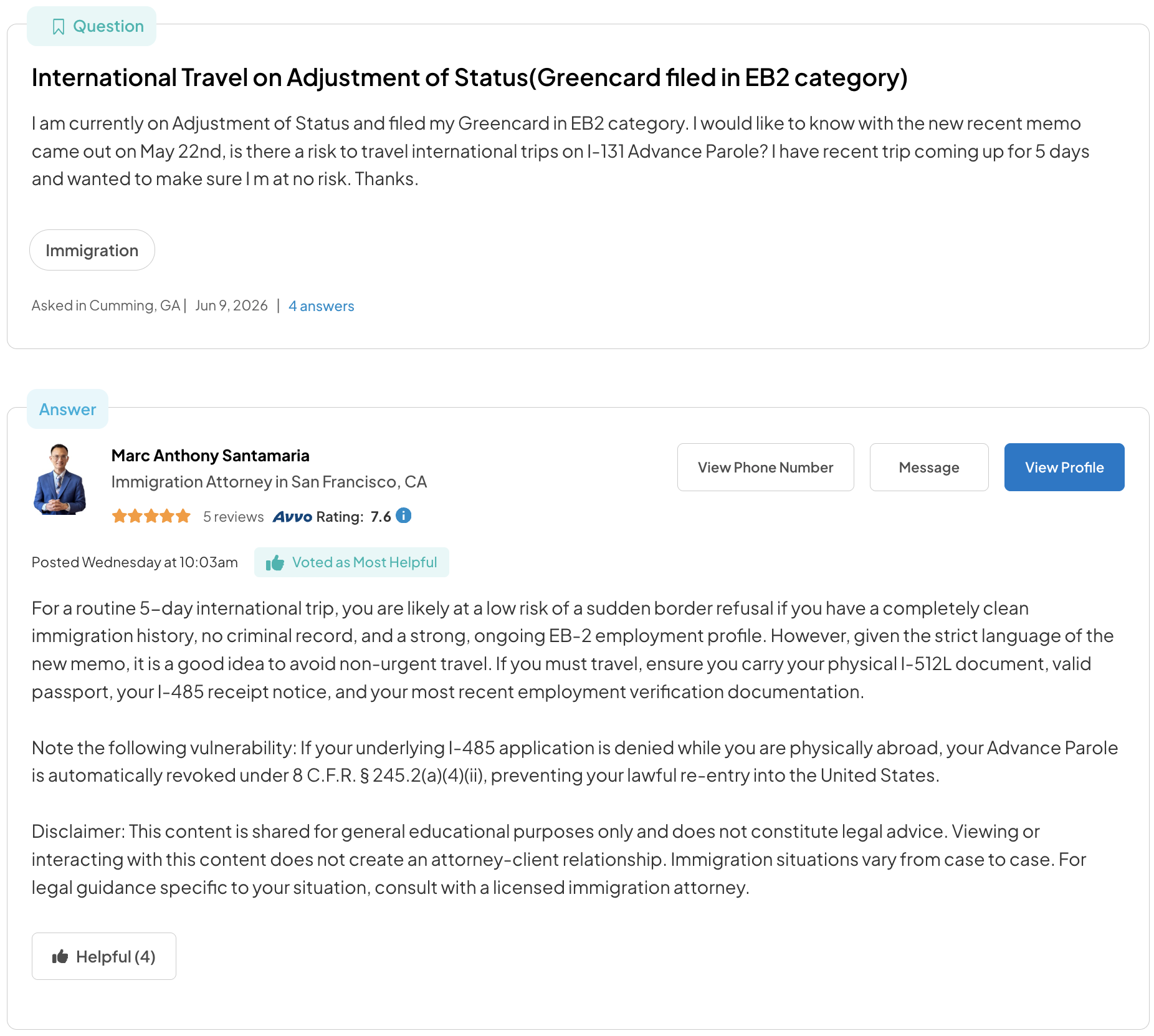
Built a voting system. Both question askers and other visitors could vote on the most helpful answers. Better answers moved up in display order, rewarding lawyers who invested in quality and getting users better information faster.
Question submission form · Q&A page with voted answer
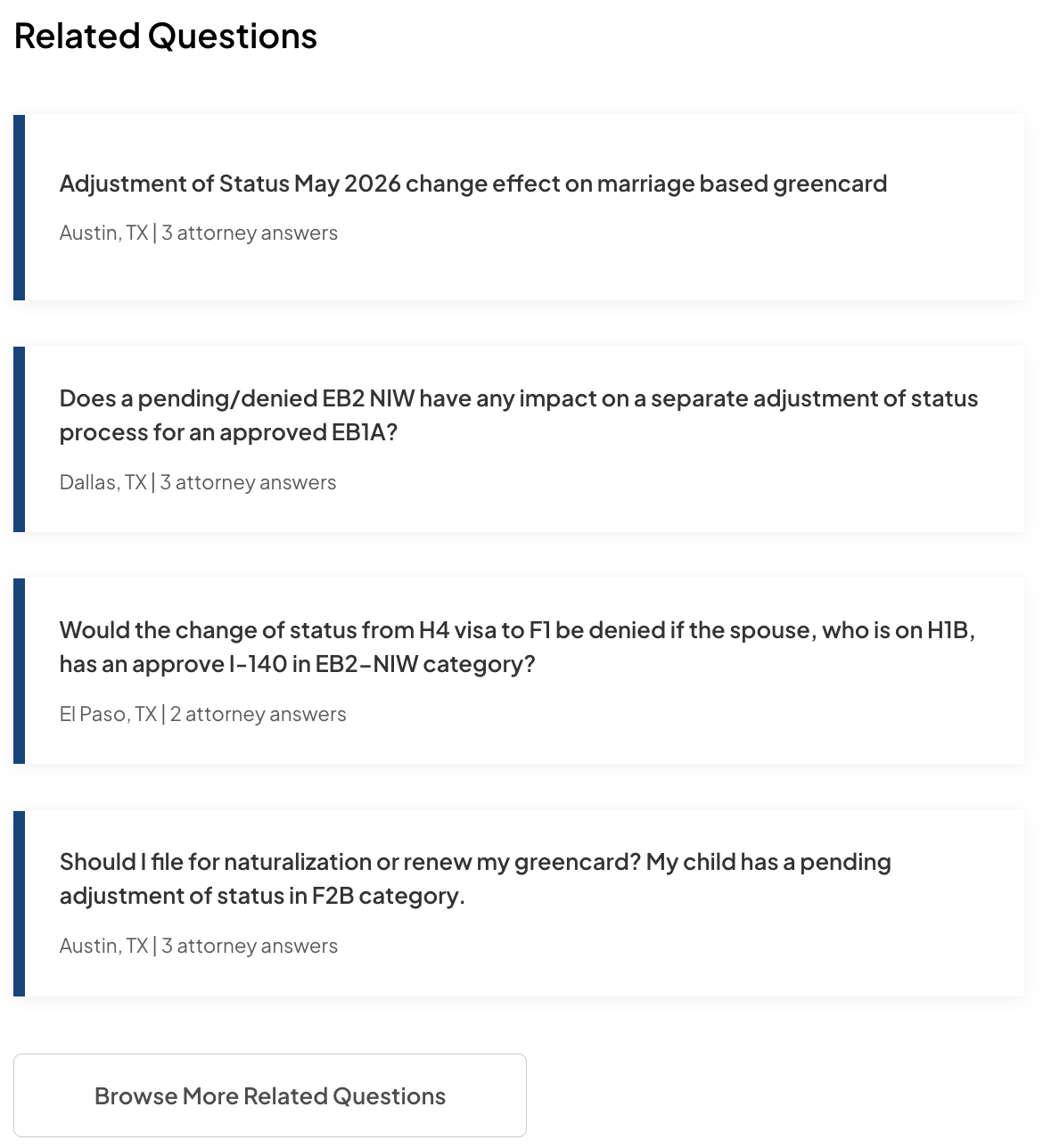
Developed the recommendation engine's content rules. Users who visited more pages were significantly more likely to hire a lawyer, so every page needed a clear path to the next relevant one. I defined the requirements and UX for an NLP-based system with:
- Deduplication and clustering to surface similar questions with strong answers, plus related questions on adjacent topics
- Weighting by recency and answer volume
- State-level constraints, with a carve-out for federal topics like immigration where state boundaries don't apply
The NLP also had to make sense of questions written by non-lawyers, non-native speakers, and sloppy writers, understanding what was actually being asked before recommending anything.
Related questions module — state-aware NLP recommendations
The outcome
Ask a Lawyer saw an 80% increase in engagement year over year, doubling Q&A-based revenue. Pages per session increased 120%. The engagement-first approach outperformed the direct-conversion push, and Q&A became one of Avvo's stronger revenue contributors as a result.